
Gmail AI Inbox 2026: how AI is changing the business inbox
Google Workspace is turning the inbox into an AI workplace in 2026: summaries, prioritisation and drafts are becoming standard. What marketing and ops teams should adapt now.

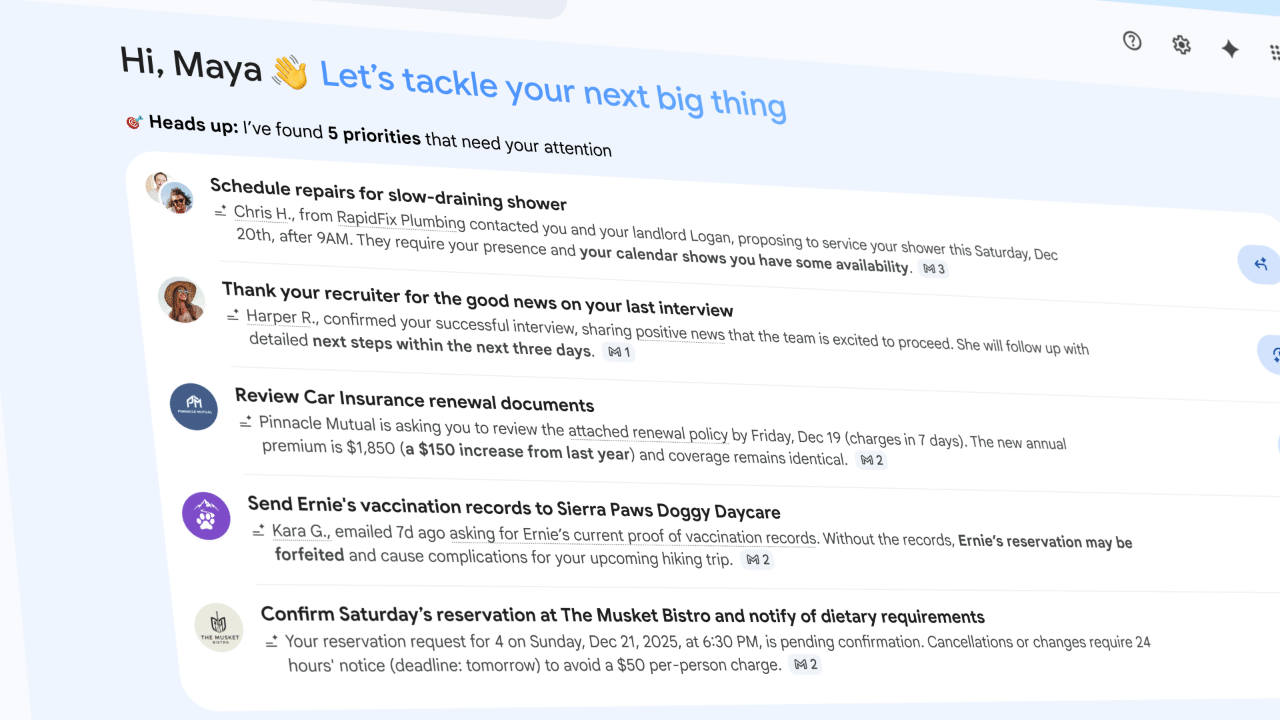
The business inbox was long a pile of unread messages. In 2026 it is increasingly becoming a control centre: Gmail and Google Workspace are building generative AI directly into the inbox, search and collaboration. For marketing and operations teams that means less manual sorting — and more responsibility for processes, data and quality.
What Gmail AI Inbox 2026 is actually changing
Under the umbrella of Google Workspace AI and Gemini in Workspace, features that used to need add-ons or manual rules are coming together: smart summaries of long threads, suggested replies, automatic prioritisation, and context from Calendar, Docs and Drive. The inbox does not just sort — it suggests what should be done next.
For teams with a high mail volume (customer queries, partners, campaigns, approvals) that saves time. At the same time, the risk grows that important nuances get lost in a summary, or that a suggested tone of voice does not fit the brand. AI in the inbox is both a productivity lever and a quality risk.
What marketing and ops teams should do now
Instead of waiting for “one more feature”, it is worth defining a clear operating model for the AI inbox:
- Clarify roles and shared inboxes: who may approve AI drafts, who sends the final reply — especially in customer and press communication.
- Prompt and tone-of-voice guardrails: short guidelines for salutations, CTAs, and what must never be sent automatically (prices, contracts, crises).
- Keep labels and filters as the “base layer”: AI complements rules, it does not replace them — compliance and audit trails need structure.
- Start measuring: time to first reply, misclassifications, manual corrections — otherwise the benefit stays anecdotal.
- Check data protection: which content may flow into model contexts, and what stays in protected areas (EU hosting, DPA, internal policies).
From inbox to workflow: the ADGENTIC view
A smarter inbox is only the beginning. Many bottlenecks appear afterwards: an email becomes a brief, an approval process, a campaign change or a ticket in the tool stack. This is exactly where AI agents for business workflows come in — not as a replacement for people, but as a layer that prepares, hands on and documents recurring steps.
At ADGENTIC we therefore treat email as a signal in the wider system: agents can classify requests, prepare drafts and trigger handovers into marketing or ops processes — with GDPR in mind and with clear human control. The inbox thus turns from a bottleneck into the entry point for automated, traceable workflows.
Short FAQ
Does Gmail AI replace the community manager or the head of ops? No. AI speeds up triage and drafts; responsibility for content, customer relationships and escalation stays with the team.
Should we send every suggestion automatically? For internal routine mail, possibly with review thresholds; externally, approval or spot checks are better — brand and liability risks are real.
What is the best first step? Start a shared-inbox pilot with guardrails and metrics, measure for two weeks, then tighten the rules and agent handovers.
In short: in 2026, AI in the business inbox is a standard tool. The winners will be teams that combine the technology with clear workflows and light agent support — instead of just answering more mail faster.
Further reading
- ChatGPT Ads fact-check: costs, CTR and conversions
- Running Klaviyo and Meta ads together – without outbidding each other
- AI adoption in the German Mittelstand
How ADGENTIC's AI agents plan, run and optimise campaigns is explained in the overview of the ADGENTIC agents.