
How Google, Meta & Co. steer campaigns autonomously in 2026
Agentic AI describes AI systems that in marketing no longer only take on individual tasks, but independently plan, execute, evaluate and continuously adjust complete campaign workflows.

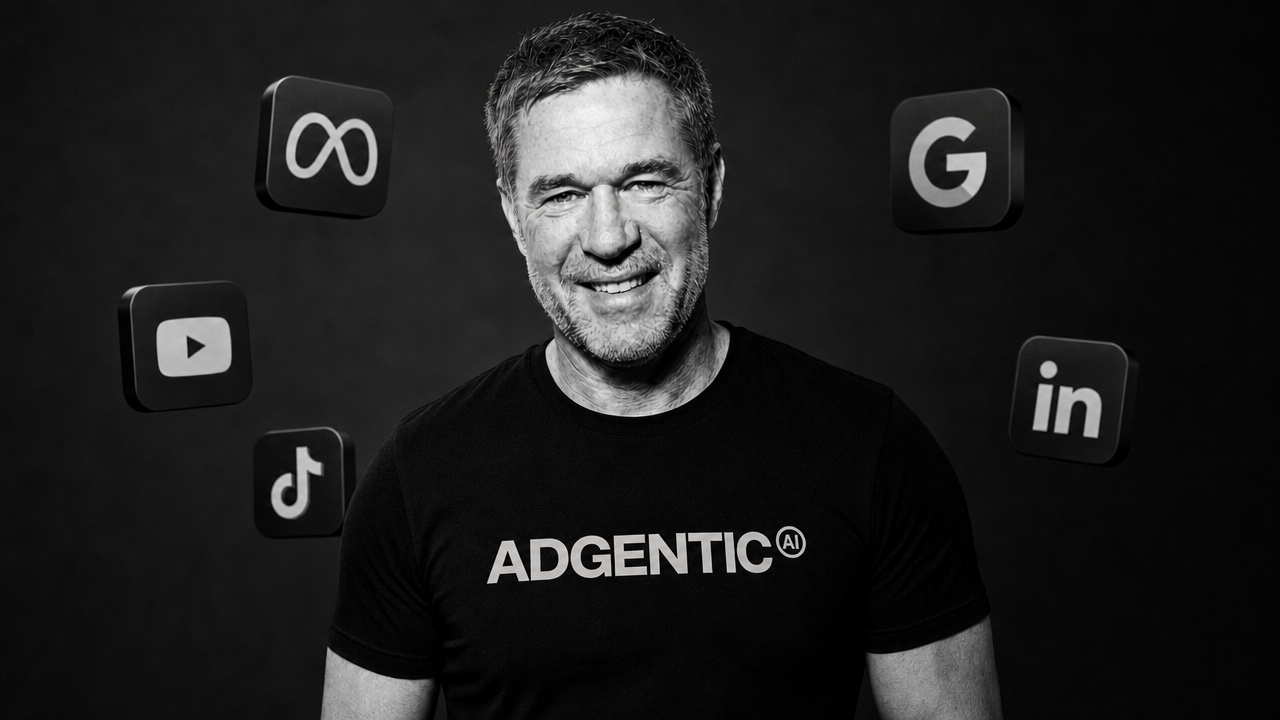
An overview of AI Max, Advantage+ and Performance Max – what marketing teams need to know now
What is agentic AI in advertising?
Agentic AI describes AI systems that in marketing no longer only take on individual tasks, but independently plan, execute, evaluate and continuously adjust complete campaign workflows. Unlike classic automation, which makes individual work steps easier, agentic AI orchestrates targeting, bidding strategy, placement and creative selection in one continuous, self-optimizing process.
The German Association for the Digital Economy (BVDW) has newly ranked “Agentic AI” in its Marketing Trends Ranking 2026 at number 2. Currently, 50 percent of the marketing decision-makers surveyed consider the topic relevant; for the future, already 61 percent expect it to matter. In an agency context, use is already well advanced according to the BVDW: 80 percent see the scaling of AI solutions as a central value driver, 57 percent say that Agentic AI is already standard in production and consulting.
How this shows up concretely at Google, Meta and Microsoft
The major advertising platforms are currently building agentic AI deeply into their systems:
- Google AI Max (Search): Since 1 September 2026, Google has been automatically migrating Search campaigns with campaign-wide broad match or automatically created assets to AI Max. Affected advertisers can in some cases no longer opt out. AI Max takes over search-term matching, text generation and adaptation as well as final URL expansion, steered through automated bidding towards CPA or ROAS goals. Advertisers retain control over brand inclusions/exclusions, URL rules, budgets and target bids.
- Google Performance Max: Automates placement across Search, YouTube, Display, Gmail and Maps, including bid selection and budget management. Advertisers set the goal, budget, assets and audience signals.
- Meta Advantage+: Automates audience expansion, placement selection, creative testing and budget distribution across ad sets. The advertiser still determines the business goal, budget and creative inputs.
- Microsoft: Made its own AI Max counterpart generally available in September 2026 and turned it on by default.
The numbers – and why they contradict each other
The effect of this automation is assessed very differently, depending on who is measuring:
- Google itself says that AI Max at full functionality can deliver around 7 percent more conversions or conversion value at a comparable CPA/ROAS.
- A beta report cites, for accounts with full agent autonomy, an 18 percent median improvement in conversion volume at target CPA over 90 days.
- For Meta Advantage+, a ROAS plus of 14 percent versus manually managed campaigns in the same period is reported.
- Independent analyses are clearly more cautious: an evaluation of more than 250 e-commerce campaigns found, in the median, no ROAS effect, while at the same time CPA rose by 16 percent for AI Max setups.
- A study by Monks observed that, of around 30,000 search terms triggered by AI Max, 99 percent of the impressions led to no conversion.
The picture is therefore mixed: platform-owned figures come out more optimistic than independent analyses. For marketing teams, that means not uncritically adopting the platforms’ automation claims, but running their own before-and-after comparisons.
What this means in practice for marketing teams
- Actively maintain control mechanisms. Even when targeting and bidding run automatically, brand lists, URL rules, budgets and target bids remain in the team’s hands – and should be reviewed after every migration.
- Plan for a role shift in the team. Demand is shifting from operational campaign management to oversight, guardrails and interpretation of results. Anyone who until now optimized bids by hand now needs competence in evaluating automation output.
- Do not outsource your own success measurement. Because platform statistics and independent studies deliver contradictory results, companies should run their own before-and-after measurements of ROAS and CPA after every automation stage.
- Keep an eye on migration dates. Google is postponing some switches (for example the DSA migration to AI Max) to later dates (February 2027) – anyone who reacts too quickly risks unnecessary extra work.
- Think ahead to agentic commerce. In a retail setting, agentic AI may in future also take over the entire purchasing process from need recognition through to the transaction – a trend that retail brands should factor into their automation strategy early.
How ADGENTIC is responding to this trend
While Google, Meta and Microsoft are building agentic AI mainly into the steering of targeting, bidding and placement, ADGENTIC goes a step further and applies the principle to the entire performance-marketing organization. ADGENTIC is the AI platform for e-commerce performance marketing: it plans, creates and launches Meta, Google and Klaviyo campaigns, with a human approving everything.
That addresses exactly the challenge this article describes: automated platform tools such as AI Max or Advantage+ take on individual campaign building blocks, but coordination across channels – from strategy through creative production to cross-channel optimization – usually remains manual work. ADGENTIC closes this gap with a direct, verified API connection to Meta Ads, Google Ads and Klaviyo, so that marketing teams do not just use individual automation features, but get a continuous agentic system for their entire performance marketing.
For marketing teams that take seriously the shift described in this article, from operational steering to oversight and guardrails, that is the consistent next step: not managing individual platform automations in isolation, but handing the orchestration itself to a specialised agentic system, while brand control stays with the team.
Conclusion
In 2026, agentic AI is no longer a distant future vision, but already an active part of the major advertising platforms. Google, Meta and Microsoft are pushing the automation of targeting, bidding and creative optimization hard. The benefit is real, but not guaranteed – the gap between platform figures and independent analyses shows that marketing teams still need their own performance control, instead of blindly relying on automated systems. Specialised agentic systems such as ADGENTIC also show where this trend is heading beyond individual platform features: towards continuous, on-brand automation of performance marketing as a whole.
Further reading
- Google AI Max for search campaigns: what changes for shops in 2026
- Agentic AI in marketing: how autonomous AI agents are redefining campaigns in 2026
- Auto-features before Black Friday: what Meta and Google change in your ads
How ADGENTIC's AI agents plan, run and optimise campaigns is explained in the overview of the ADGENTIC agents.
Sources: BVDW (Marketing Trends 2026 – agentic AI enters the top 3), Google Ads Blog (DSA upgrade to AI Max), aixh.com, ad-times.com, Monks study on AI Max performance, Common Thread Co. (Google Ads Changes 2026), ADGENTIC (adgentic-ai.com).
As of 17 September 2026 – research and compilation for editorial purposes · www.adgentic-ai.com