
Can I clone models with AI and use them in ads?
No — not in Germany and the EU without explicit consent. Not even when only the face is real and the rest was generated entirely by AI.
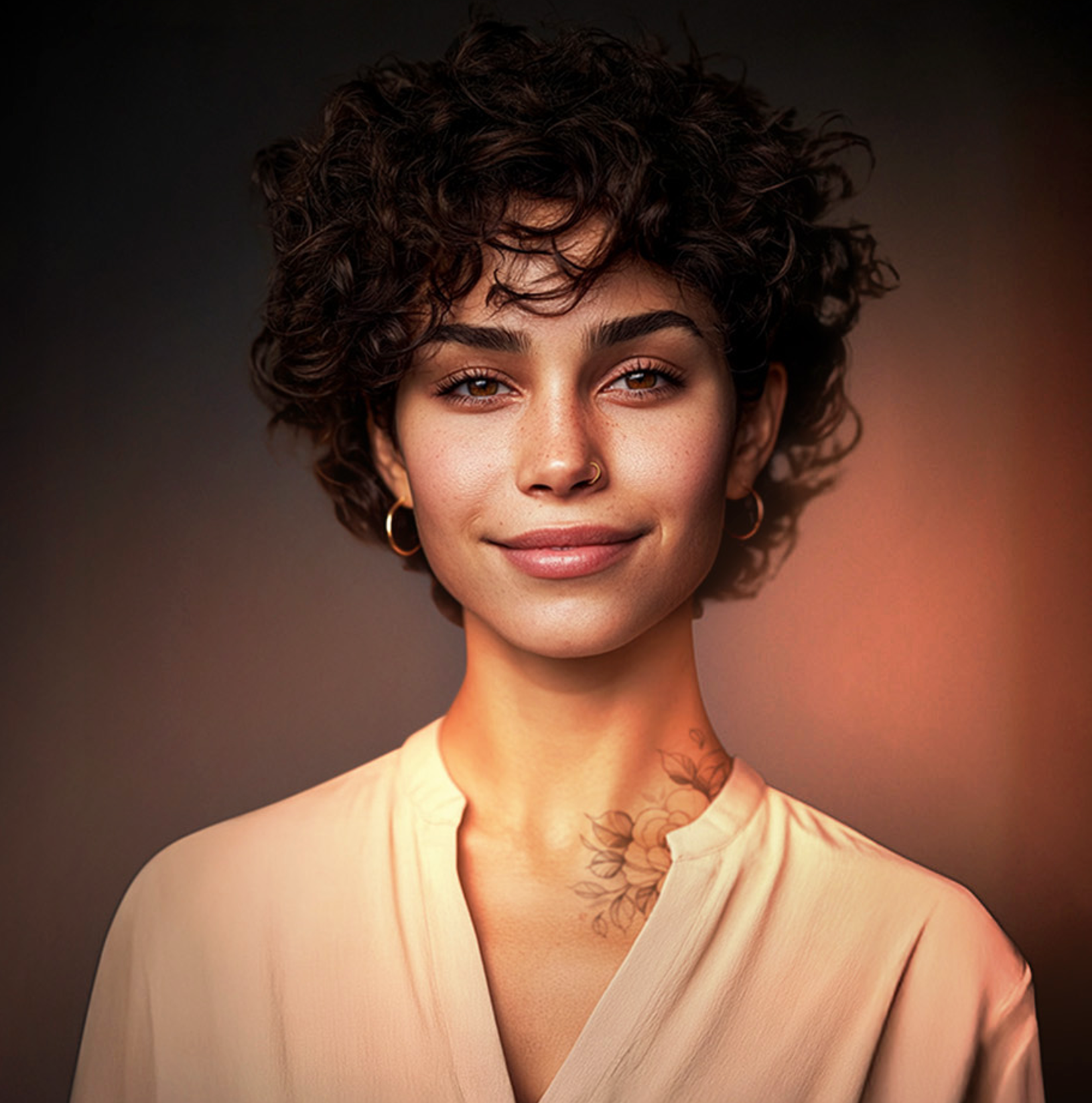
Sofi

What the Rainbow Shops case means for German companies
No — not in Germany and the EU without explicit consent. Not even when only the face is real and the rest was generated entirely by AI. The current case involving the US fashion chain Rainbow Shops shows just how expensive it can become when companies ignore this.
What happened at Rainbow Shops?
Model Francheska Pujols had a regular catalogue shoot for the New York chain Rainbow Shops in 2024. Her contract allowed “minor edits” to the photos — small image adjustments. What Rainbow Shops made from them were completely new, AI-generated images: new poses, new scenes, some of them revealing, in situations she never stood in front of a camera for. She sued, first withdrew the claim in order to settle privately — and refiled it in June 2026 after the negotiations failed.
Would this also be allowed in Germany if I only reuse a model’s face with AI?
No. Under section 22 of the Kunsturhebergesetz (KUG), every publication of a recognisable “likeness” requires the consent of the person depicted — and German courts treat AI-generated images the same way as photographs. The Federal Court of Justice (BGH) made this clear in 2022: a likeness exists whenever a relevant part of the audience believes it recognises the person shown. Whether the image was created with a camera or with an AI model makes no difference.
Isn’t it enough if the contract allows “image editing”?
No — and that is exactly the core of the Rainbow Shops case. Pujols’ contract allowed “minor edits”, not a complete AI regeneration. German courts take a similarly strict view: consent to photography does not cover a later AI alteration of the face if the person has not clearly signed off on that. Companies that work with model contracts should therefore not only have “image rights” granted, but explicitly clarify whether and to what extent further AI processing is allowed.
What does a company concretely face if it does it anyway?
Under civil law: injunctive relief, damages and, in serious cases, compensation for pain and suffering. Under criminal law, section 33 KUG provides for up to one year in prison or a fine for the deliberate dissemination of a likeness without consent. On top of that, from 2 August 2026 there is a labelling obligation for AI-generated content under Article 50 of the EU AI Act — so anyone already unlawfully using a real face may, in doubt, be committing two violations at once.
How does a company protect itself in concrete terms?
Three things: obtain consent that expressly covers the use of AI — not just “image rights” in general. Plan for the labelling of AI content from August 2026. And put in place a pre-publication review that catches exactly these cases before they go live.
That is exactly why, at ADGENTIC — an AI-native martech platform that deploys autonomous AI agents for advertising and marketing workflows in mid-sized companies in German-speaking markets — we built CORA, a compliance agent that reviews every ad before publication: image content, copy, personality-rights and labelling risks included. Advisory, never executive — the decision stays with the company, but the risk becomes visible before it turns into a legal dispute.
The Rainbow Shops case is only the beginning. The real development is a different one: companies will not stop wanting to save costs — they will increasingly use entirely invented AI model avatars for which there is no real person and therefore no litigation risk. Legally unproblematic, economically brutal for the mid-tier of the modelling industry. The case worth remembering, then, is not this one lawsuit — but what it reveals about the next two years of the advertising industry.
Further reading
- Does every ad need an AI label?
- EU AI Act for SMEs: what you actually need to do from August 2026
- One workflow instead of 10 subscriptions
How ADGENTIC's AI agents plan, run and optimise campaigns is explained in the overview of the ADGENTIC agents.
Sources:
Thanks to Bernhard for the inspiration: https://www.linkedin.com/in/bernhard-trogrlic-5574a9130/
- PetaPixel: Model Sues Fashion Brand After it AI-Generated Pictures of Her
- PetaPixel: Models Accuse Fashion Brand of Using AI to Recreate Them
- Sourcing Journal via Yahoo: A Fashion Model Is Again Suing Rainbow Shops Over Unsanctioned AI Images
- WWD: Rainbow Used a Fashion Model in Its Ads. She Said It Was AI.
- Prigge Recht: Personality rights and AI: what are the limits?
- IT-Recht Kanzlei: AI images in the online shop: 12 practical examples of the labelling obligation
- LHR Rechtsanwälte: Artificial intelligence and personality rights
- Paloubis Internetrecht: AI-generated advertising with celebrities
- eRecht24: What does the right to one’s own image cover?